AI Labs / Filmmaker · photographer · creative director

Filmmaking, AI and systems designed around people

I’m a filmmaker and creative director working across live action, animation and AI. I take projects from the first idea to the finished film, continually exploring new technologies to make budgets go further and open up creative possibilities, while keeping craft and storytelling at the heart of it.

Alongside filmmaking and photography, I design systems that make complex technology simple to use. A clear interface gives people a view of their work, while tool coordination and technical decisions happen behind the scenes.

AI product lead · creative technologist · director

Creative technology / AI product leadership / post-production & film

What I can help with
  • AI filmmaking and hybrid film production
  • AI film and post-production pipelines
  • Creative tools and product direction
  • AI-agent evaluation and security
  • Workflow automation: n8n and API integration
  • A customized Hugr workspace
Oscar-shortlisted8× PromaxWebby AwardMTV · VH1 · AMC · 180LA1,341 tests green on HugrFirst commit to live in 7 days
Start here

Three systems,
ready to inspect.

01 / Customizable operating layer

Hugr

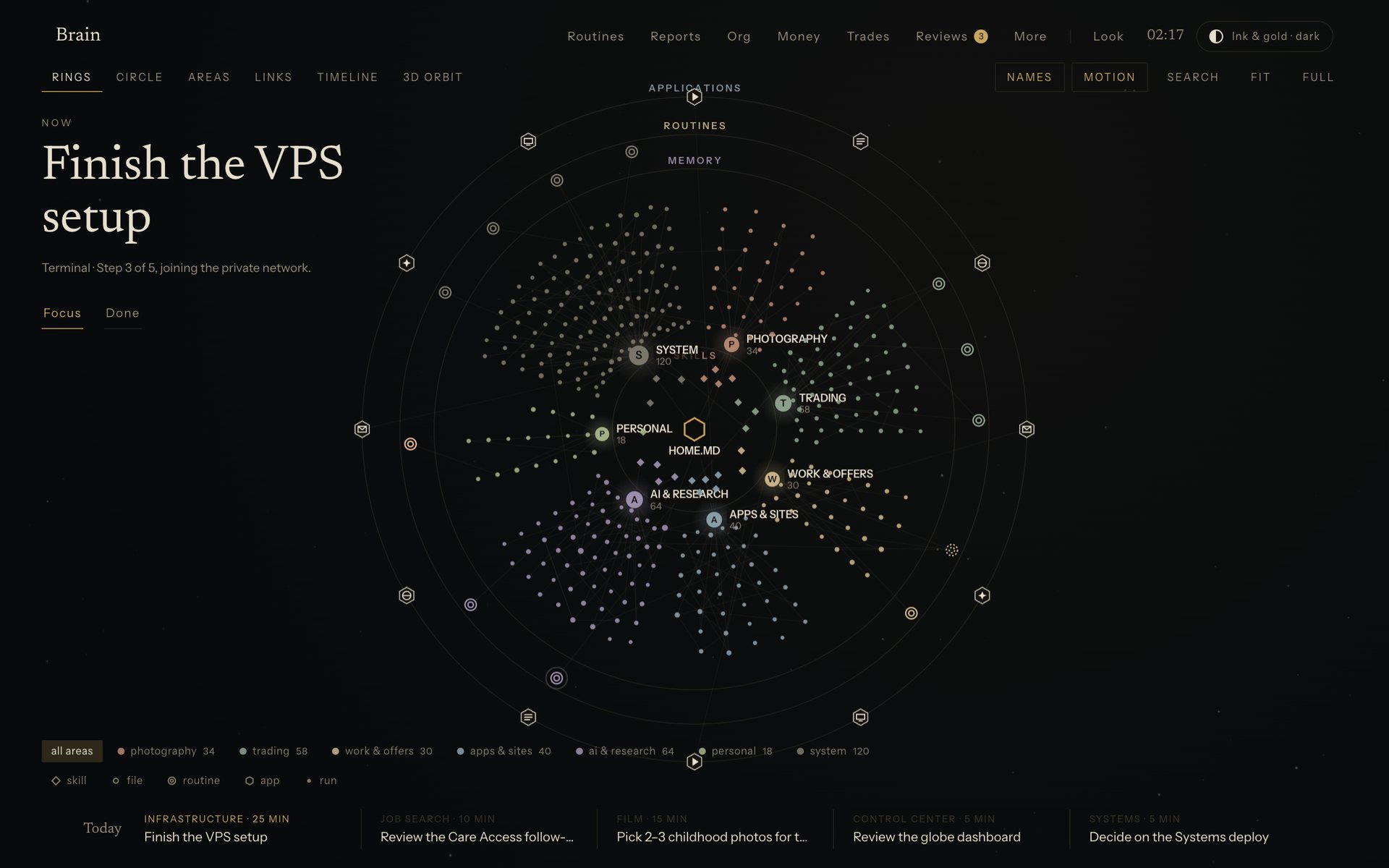
Hugr is a customizable operating layer that brings tools, projects and AI activity into one simple workspace. I use it in my own work, and it is available for purchase and customization for individuals and teams.

  • DoesRoutes every request to the cheapest capable model, remembers what worked and corrects itself when it is wrong, and runs a team of AI agents from one seat with a shared mailbox — research, build and review without switching tools
  • Business case50–70% lower token cost on comparable work with no added latency, because the saving is in routing, not in doing less; routing rules, memory policy and the interface skin are configuration, so a team can point it at its own workflow without a rebuild
  • OfferI set up Hugr, connect the agreed tools and customize the workspace for the individual or team. The scope is defined around the work you want to manage and the integrations you need. Hugr works as an operating layer over existing tools; supported integrations and deployment requirements are established for each setup
  • BuiltThe same orchestration aimed at production: a post-production, FX and film pipeline — storyboard through AI-generated shots to live-shoot logistics — built with Codex under the same direction: one director, a team of agents, every output checked
Role
Product lead and build director: vision, decision model, memory-safety policy, acceptance gates and interface design — full pipeline ownership
Method
Directed build with evaluation gates: an implementer agent builds, a director agent reviews, and every claim is re-derived before it is recorded — responsible-AI practice as process, not policy
Attribution
Johan-directed architecture and review; implementation by AI agents under adversarial review
Stack
Python, SQLite, Cloudflare Workers / D1 / Vectorize, MCP, Claude Code hooks, Gemini free tier
One core, many models, two agents
Interface skins / one system, any skin09 skins
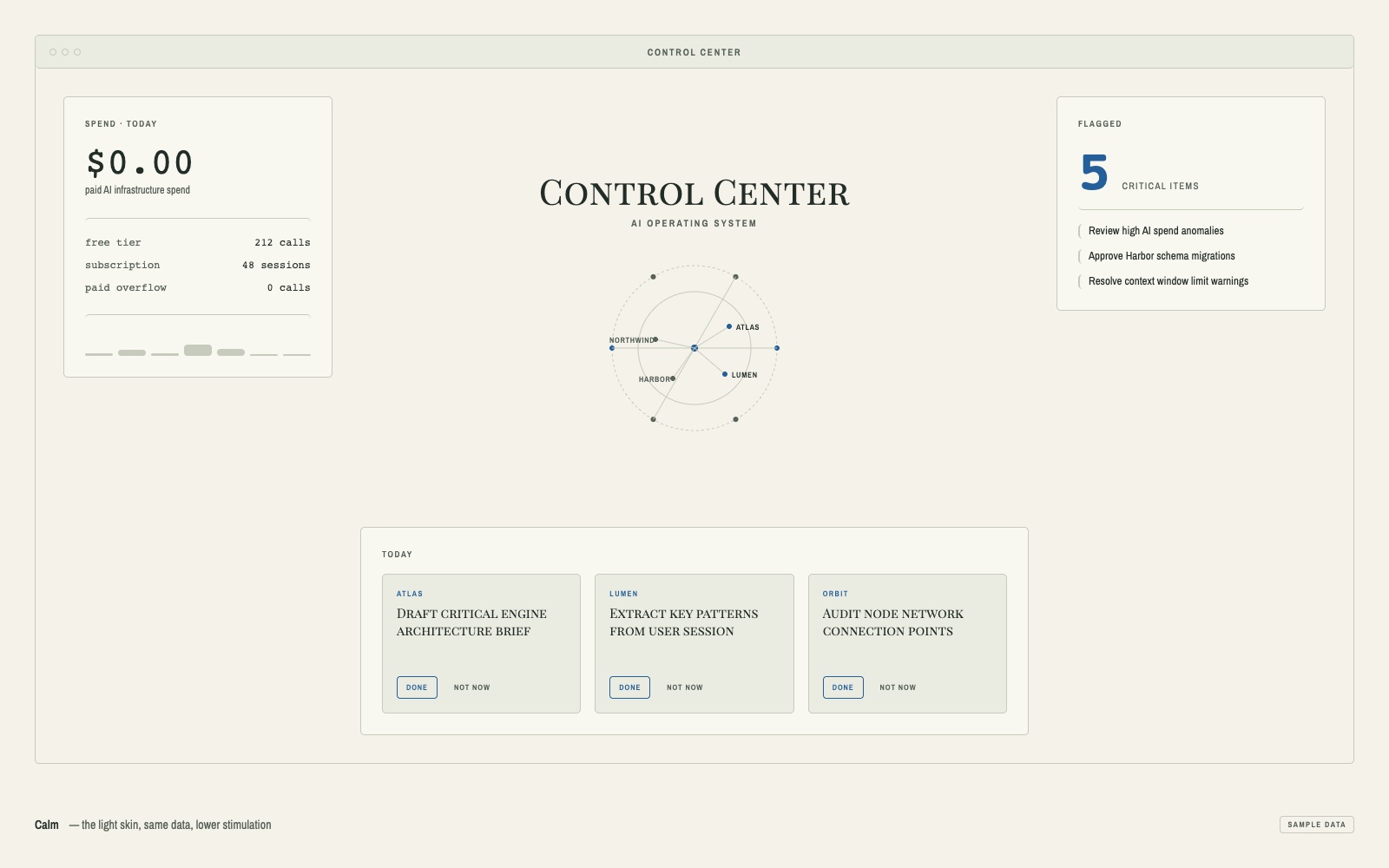
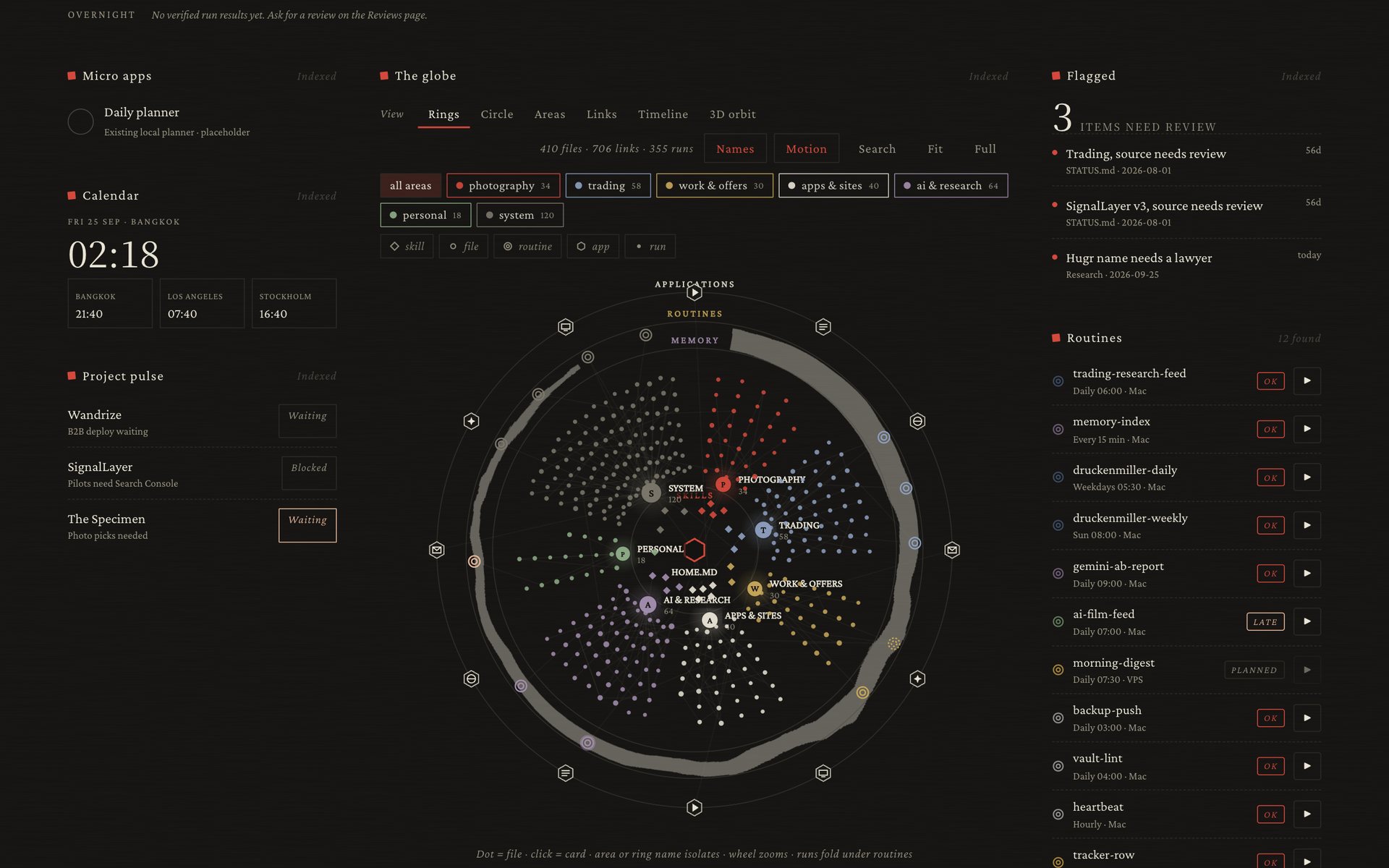
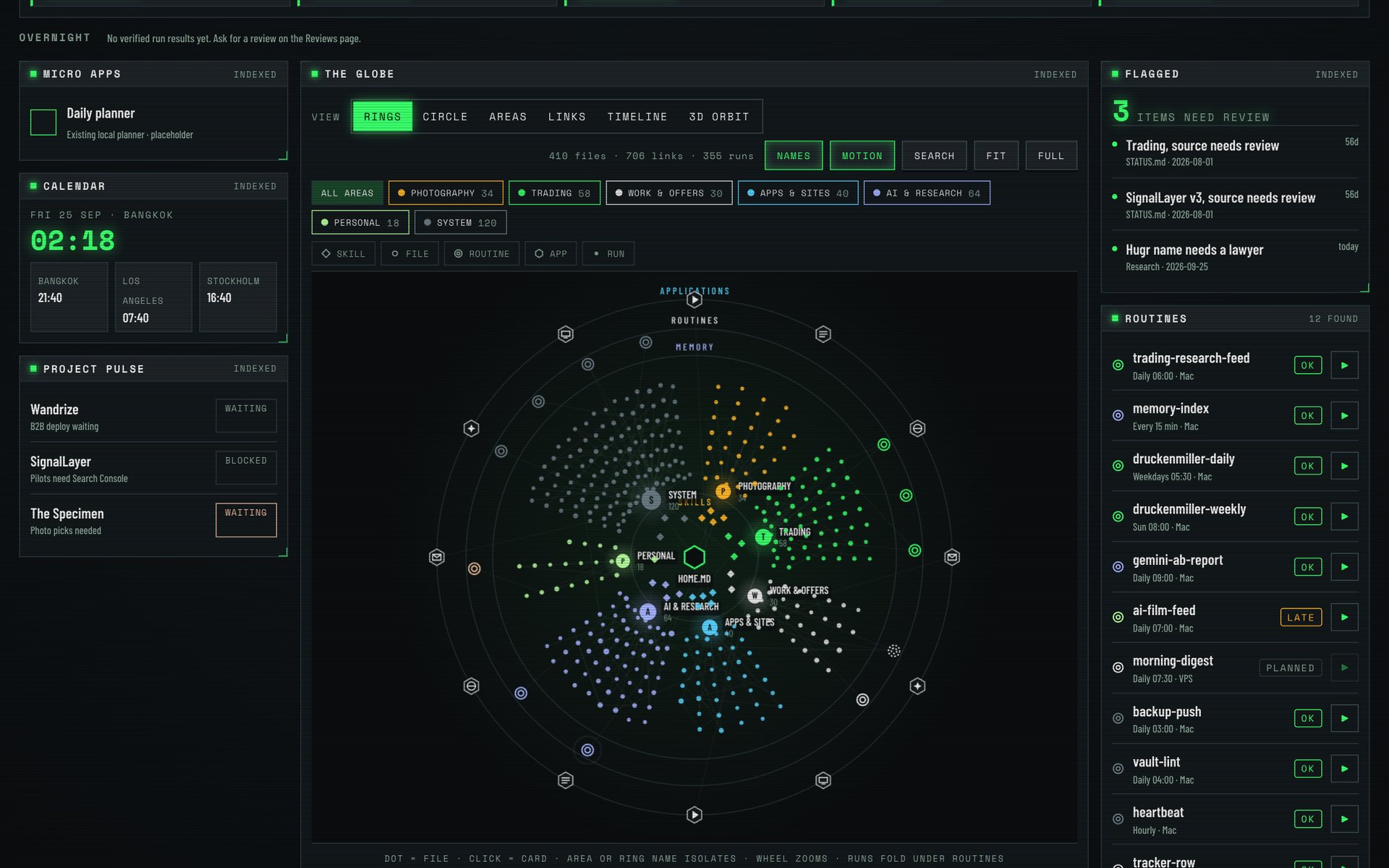
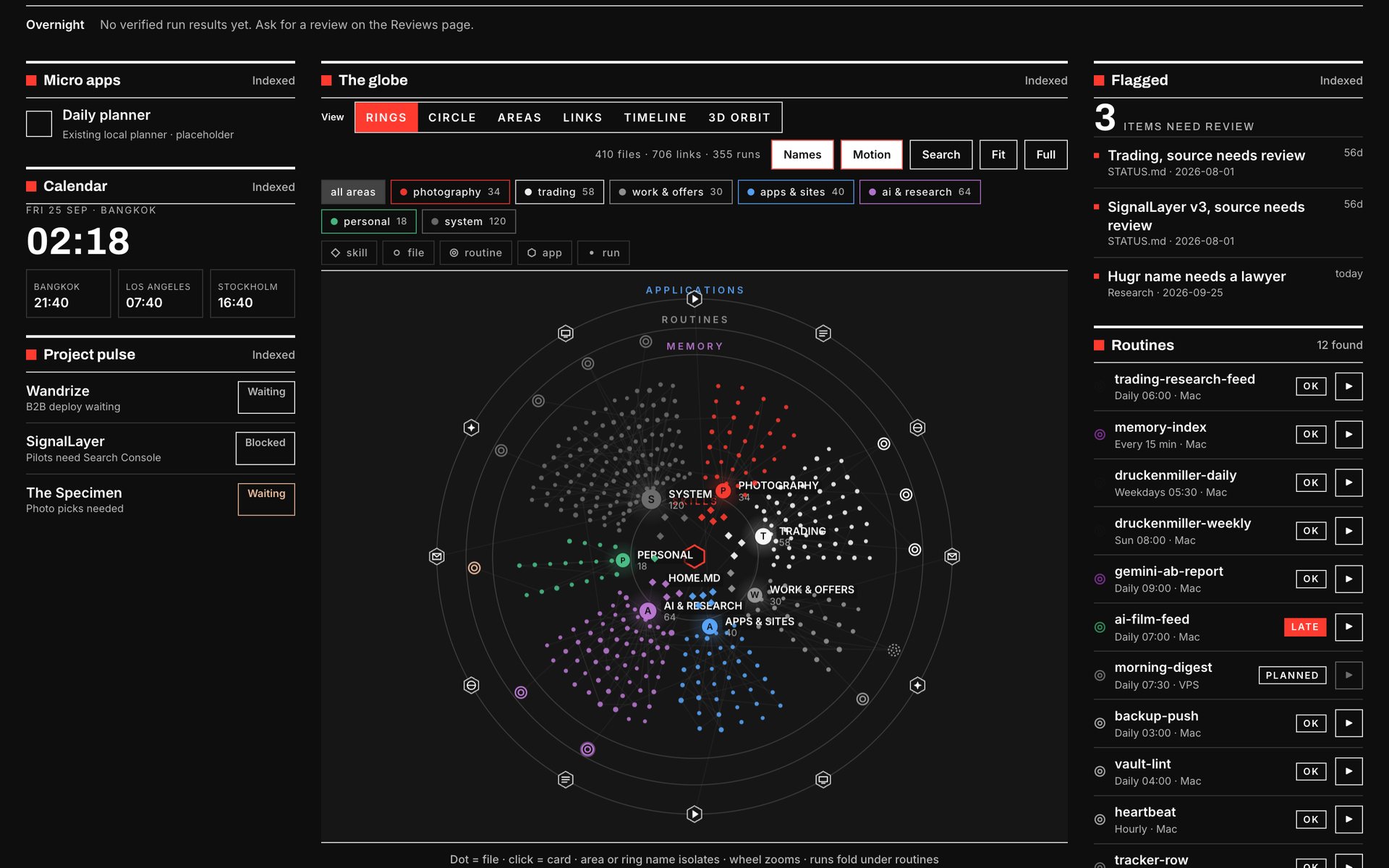
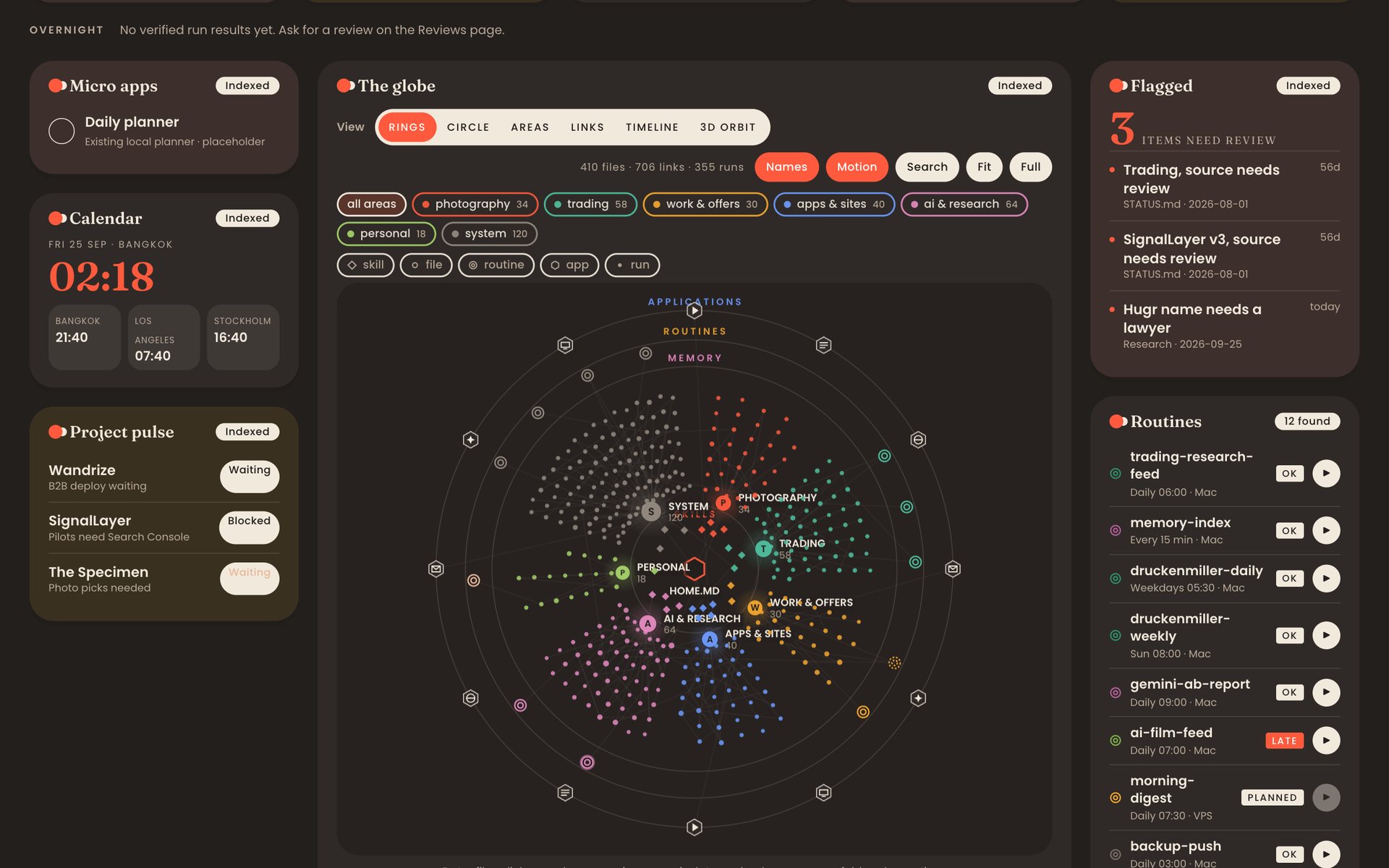
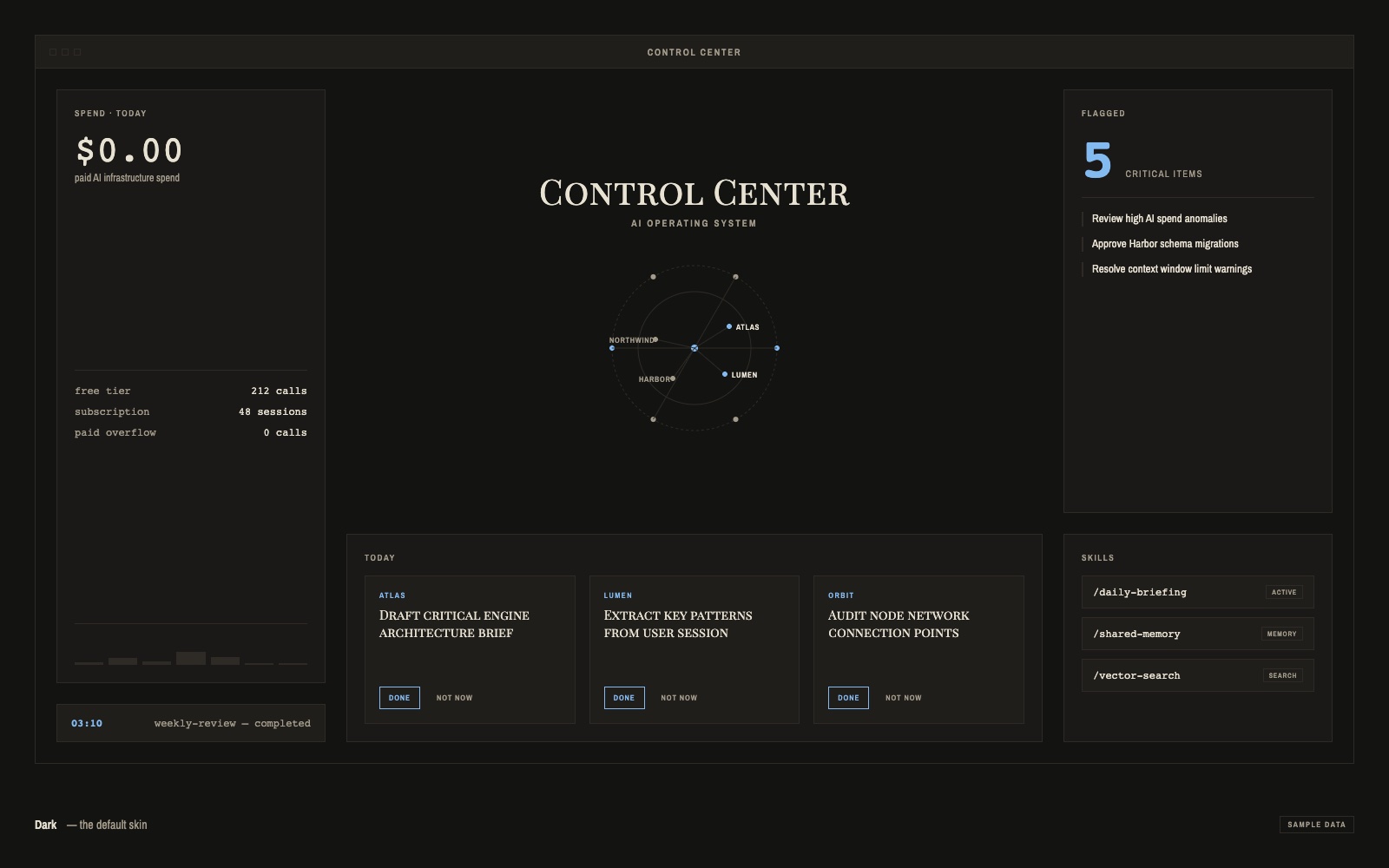
Hugr Control Center in the Dark skin: today's tasks, spend panel, project orbit, flagged items and skills
Dark, the default Ink and sage
Sumi-e / sample dataWashi and one seal
Apollo / sample dataMission control

Problem

Every AI tool is brilliant alone and forgetful in company. Models lose context, bill by the token and fail in their own private ways, and none of them knows what the others did yesterday. Hugr is the layer that remembers.

How it was built

Call it vibe coding with a building inspector. The architecture and the acceptance bar belong to one person. Underneath, a real multi-agent orchestration layer runs the work: an implementer AI writes the code, a second director AI tears into every change, and no number goes on the record until it has been re-derived. On 2026-09-22 that crew shipped five major components before the day was out.

Product decision

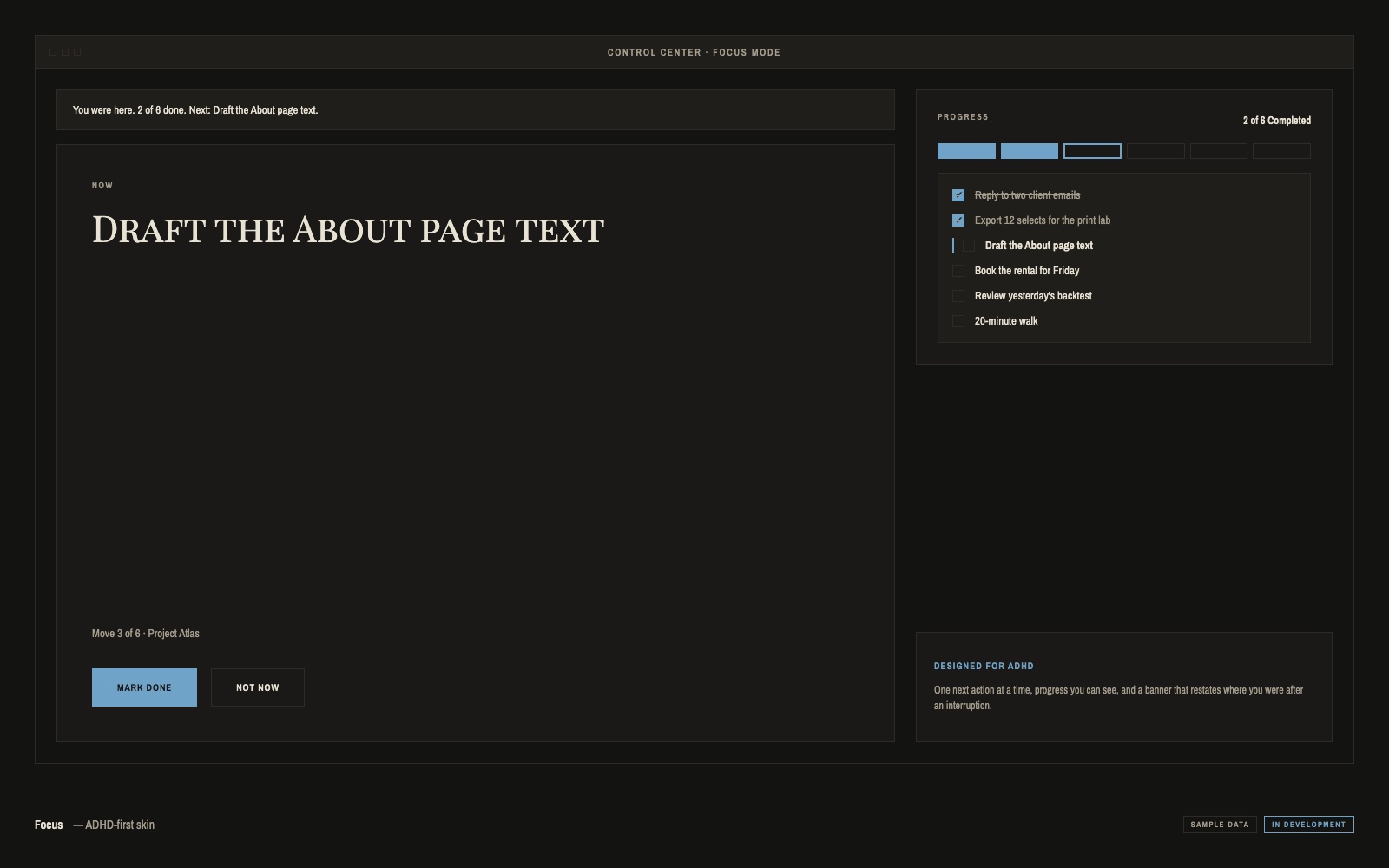
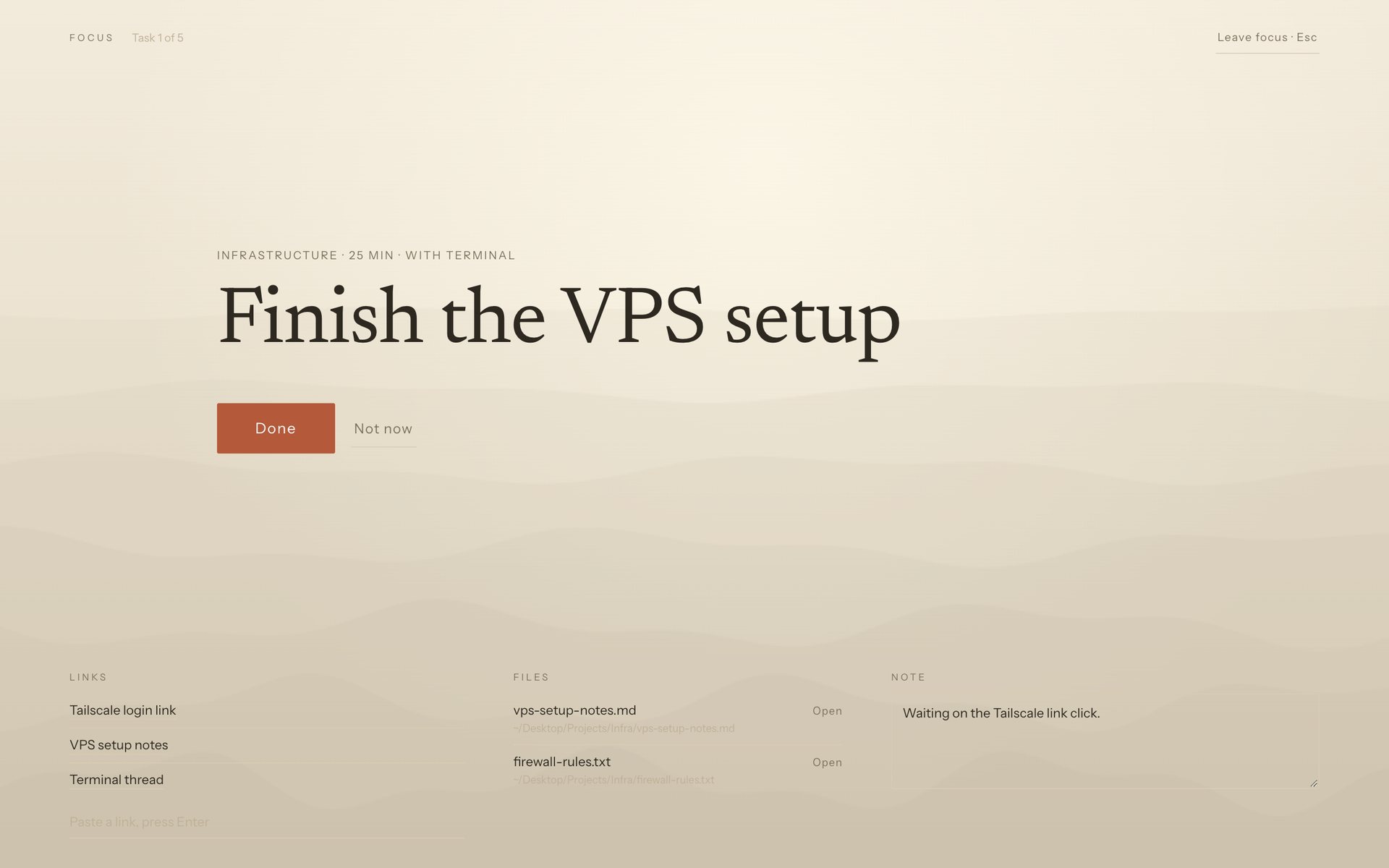
One system, three moods, and room for more. The theming runs on tokens, not a fixed template, so a Dark default for the cockpit and a Calm light skin with the same data and fewer panels are already live — and a Focus skin, purpose-built for ADHD users, strips everything down to one next action. Any new skin plugs into the same token set; nothing about the interface is hard-coded to one look.

Discuss a Hugr setup
Evidence / recorded checkpoint 2026-09-23
1,341Tests recorded green: 1,174 Python, 167 Worker
7 daysFrom first commit (2026-09-15) to live deployment (2026-09-22)
127msMedian live routing latency across 646 real prompts (p95 253ms)
$0.00Metered AI spend: paid APIs are off by default, and 207 real calls ran on the free Gemini tier
  • LiveEvery request typed into Claude Code is read and classified in real time (domain, confidence, mode) and gets a model recommendation, and every decision is logged with its latency
  • DeployedThe agents have their own mailbox, live in production. An end-to-end test sent a message, read it back word for word, and proved it never leaks into memory search
  • LiveA privacy-filtered status feed powers the Control Center dashboard; the live route turns away missing tokens and wrong scopes, verified end to end
  • ShippedHard schedule gates, memory validity windows, a recorded reason on every programmatic memory write, and staged memory proposals that outside clients can suggest but never write live
  • ShippedFive major components in one day (2026-09-22): provider-failure tracking, headless-skill coverage, schedule hardening, outcome credit and the agent mailbox
  • ProvenMemory that admits its mistakes: a demonstrated wrong fact was superseded through an append-only tombstone registry. The correction now outranks the error, and nothing was deleted
  • RoutingCapacity is pooled, not bought. Generic work hits the free Gemini tier first, behind a hard gate that refuses any call carrying private memory. Heavy reasoning rides the existing Claude subscription. Paid APIs stay off and fail closed; an overflow lane opens only when the free quota runs dry, and only under a hard daily cap

Inspect Hugr build receipt
02 / AI film pipeline

AI film pipeline

Two approaches, one creative responsibility: from fully AI-generated films to live-action footage enhanced with AI, shaped around the story and the intended result. Post-production, FX and film, run as a system: storyboard into shot packets, real neighbouring frames and exact endpoints, cheapest test first, one diagnosed re-route, frame-level QC before anything reaches the timeline. Two productions through it so far, built with Codex, directed the same way as everything else on this page.

  • PracticeCreative direction, concept development, storyboarding, production, editing, colour, sound and delivery, with n8n and API integration, AI model orchestration and connections to established editing tools. I define the creative requirements and direct implementation with AI coding tools
  • DoesTurns a storyboard into shot packets — real neighbouring frames, exact start and end frames, one action, one terminal pose, the hard failures, the provider and the cost ceiling — then routes each beat to conventional edit, compositing or generation
  • DoesRuns the models as a ladder, cheapest meaningful test first: Kling, MiniMax and Veo A/B on the same packet, one diagnosed re-route, never a blind re-roll; every result QC’d in context at frame level
  • BuiltGravity-shift plates, wall-run, through-wall breach and wall-to-ocean collapse as separate environment passes; the performer is composited, never regenerated with the destruction
Role
Director and pipeline architect: storyboard, shot design, identity and continuity gates, model routing, final cut
Method
Codex-directed build: manifests, shot packets and QC records for every beat; real footage leads, generation only where edit, reframe, roto or compositing cannot
Attribution
Johan-directed and shot; pipeline code and manifests by Codex under his direction; generated passes from Kling, MiniMax and Veo
Stack
Codex, Premiere Pro, Photoshop, FFmpeg, ProRes proxies, Kling, MiniMax, Veo, Aleph, JSON manifests
Venice Racket Court / the airborne sequenceTake-off, wall, flight and landing · silent
Frames / two productions03 shots
AI Fashion FilmThe tongue becomes a snake
AI Fashion FilmThe 360 turn
Venice Racket CourtWall to ocean
Clips / AI Fashion Film05 clips · silent
AI Fashion FilmThe 360 turn
AI Fashion FilmThe tongue becomes a snake
AI Fashion FilmTurning into the concrete rooms
AI Fashion FilmHolding the crow
AI Fashion FilmClose-up to snake

AI Fashion Film — a complete film created with AI

This fashion short (working title) began with a question: could a fully AI-generated film feel as though it had been photographed, including its visual effects? I handled the complete production: concept, storytelling, storyboard, image and video generation, editing, colour, sound and final delivery. Creative direction held the film together.

This film is 100% AI-generated.

Venice Racket Court — live action, still photography and AI in one sequence

A hybrid production combining live motion, still photography and AI-generated imagery and effects. The live material is the starting point; the finished sequence brings the elements into a coherent visual world. The challenge is continuity: recognizable characters across shots, a consistent visual style, and a coherent join between live and generated material.

Google Veo was the main video-generation tool. Editing involved Adobe Premiere Pro and DaVinci Resolve. Reported production cost: approximately $300 for a mix of live shoot and AI. Google Veo added no generation cost, using available credits alongside existing paid subscriptions.

A simple interface for complex creative work

People using a film workflow should be able to focus on the story without needing to understand every underlying AI model. I design the interface around that principle: the system assesses generated shots against the storyboard and creative outline, and runs further attempts on outputs that are not suitable. The practical focus is consistent characters, a coherent visual style and awareness of generation cost.

The two films show two production approaches. They are not a controlled cost comparison.

Problem

Generative video is brilliant at motion and terrible at continuity. Left alone it changes the face, the body, the wardrobe and the room between shots, and it charges for every failed attempt. A film needs the opposite: one performer, one court, one look, from the first frame to the last.

System

The storyboard controls pose, camera and action; the photographed footage controls face, hair, body, skin, wardrobe and court continuity. Each beat becomes a shot packet with real neighbours and exact endpoints, gets a no-cost animatic first, and is only sent to a model after the cheapest meaningful test is approved. Generated passes are composited over the real plate, not the other way round.

Director’s decision

Real footage leads. Beats that can be cut, reframed, retimed or rotoscoped never reach a model; the impossible ones — the take-off, the breach, the collapse — are built as separate environment passes with the performer kept whole. The gravity shift is a camera trick on set, not a prompt.

Evidence / from the production manifest
31Camera originals, byte-verified, with 31 ProRes proxies and zero duration mismatches
122Shot-packet files across the beats
295AI-asset files: Kling, MiniMax and Veo passes with A/B boards
579Export files, including a 69-second cut at 23.976 fps
  • Built61 VFX-test files: gravity-shift plates, real-still tumble mattes, wall-run, through-wall and wall-to-ocean passes
  • BuiltModel A/B on identical packets — Kling versus MiniMax, Veo for non-face physics — with frame-level QC boards for every candidate
  • BuiltPaid generation running total on the manifest: $0 — every pass so far ran on free tiers behind a cost ceiling and an approval step
03 / AI security

Gatewarden

A local security gateway for AI agents: an MCP proxy with zero-trust defaults that pins approved tool definitions so a tool cannot quietly change what it does, gates new connections, and records every decision. Built for one operator to understand, not only a security team.

Role
Product direction / security workflow owner
Contribution
Threat model, product definition, interface direction, acceptance criteria
Attribution
Johan-led direction; substantial implementation by Claude agents
Stack
TypeScript, Node.js, Electron, MCP
Product views / Current prototype05 screens / scroll sideways
Protection dashboardThe app
Onboarding scanThe app
Pinned tool definitionRug-pull blocked
Tool-pinning testRecorded output
Decision logEvery call recorded

Problem

AI clients can connect to tools that change definitions, expose secrets or introduce unreviewed actions. Existing controls are often too technical for an individual operator.

System

A transparent local proxy inspects every message, pins approved tool definitions to defend against tool-poisoning and rug-pull attacks, gates new connections and records signed, privacy-aware decisions.

Product decision

One engine has two interfaces: a CLI for technical inspection and a restrained menu-bar application for everyday control.

Evidence / recorded build
113Engine tests in recorded build
77Application tests in recorded build
0npm audit vulnerabilities reported
0Semgrep findings reported
  • ImplementedProxy defenses, exposure scan, audit logging, CLI and Electron interface
  • ImplementedEngine-to-app connection, onboarding, configuration backup and restore
Inspect Gatewarden build receipt
More systems

Three additional projects with build receipts and deeper dossiers.

04 / AI operations

SignalLayer

A site scan becomes proof-gated fixes and repeatable monitoring — AI visibility you can audit.

Product views / recorded UI02 views
Validation labPrimary view
Control planeSecondary view
827Tests in the recorded checkpoint (2026-08-02)
170/170Routes in recorded validation
16/16Rendered QA captures recorded
05 / Creative technology

Signature Look System

Photographic direction turned into repeatable, adjustable effects; the photographer keeps the last word.

4,279Lines in the principal Python tool
5Documented processing modes
1Verified local output run
Composite output, Yoru I
Two negatives, one frame.
Edge where the two layers meet.
One tone carried across both exposures.
Compositing, demonstrated

One output from the Signature Look System's double-exposure mode. Tap a mark for what the composite shows.

06 / Quantitative research

Quant Futures Lab

A futures trading research system: backtests, walk-forward, indicator audits and NinjaScript and Pine ports, built to kill attractive ideas before they cost money.

Most candidates die in walk-forward. Recorded research run, not live performance.
Research screens / illustration with sample data02 screens
Walk-forward gridSample data
Rejection logSample data
4.56Training profit factor recorded
0.95Out-of-sample profit factor recorded
RejectedCurve-fitted configuration, not promoted
Live location visual

A view of where
you are.

This interactive visual begins when the page opens.

It contacts this site’s location service. Your IP address and browser details can be used to estimate an approximate city and local time for the visual.

Location view.
SIGNAL ████
Location view enabled
Answer index

The short
version.

Six questions a hiring manager, a search engine or an AI assistant would ask. Answered without the adjectives.

01

Who is Johan Hesselgren?

Swedish-born director, creative director and creative technologist based in California, working worldwide. Twenty years leading creative teams for MTV, VH1, AMC and 180LA; Oscar-shortlisted, eight-time Promax and Webby winner. He now builds AI systems the way he directs: set the brief and the bar, lead the agents through the work.

02

What does Johan build?

Working systems with the receipts attached. Hugr, an AI operating system that routes every request to the cheapest capable model and keeps a memory that corrects itself. A post-production, FX and film pipeline built with Codex. Gatewarden for AI-agent security, SignalLayer for AI visibility, Signature Look System for computational photography, and Quant Futures Lab, a futures research system that kills bad trading ideas before they cost money.

03

How does he work?

Brief and acceptance criteria in business terms. A team of AI agents led through the build. Adversarial testing before anything ships, and the outcome measured. Days instead of quarters, with a director’s accountability.

04

When should a team bring him in?

When the work needs creative judgment and a working system at the same time: AI product leadership, creative technology, evaluation and responsible-AI practice, or a post-production and film pipeline that has to hold up in public.

05

What proof supports the work?

Dated, re-derivable numbers on every system. Hugr: 1,341 tests green, 127 ms median routing across 646 real prompts, $0.00 metered spend, first commit to live in 7 days. Gatewarden: 190 recorded tests, zero npm-audit vulnerabilities. Every case study links to its build receipt.

06

How do you start a project with Johan?

Send the project, the audience and the deadline through the form below, email him, or book a call. Commission a system, consult on one, or license what exists.

Recognition

Twenty years on air.
Now on the record.

AwardsOscar shortlistLiving in Emergency · documentary, producer
Awards8× Promax BDA3 Gold · 3 Silver · 2 Bronze
AwardsWebby Award2019
Networks and clientsMTV · VH1 · AMC · 180LATwenty-plus years directing and producing
Selected clients / platforms — as shown on the Motion page
Credits on IMDb
Smaller systems

Technical workbench

Smaller systems that show range, technical curiosity and practical workflow design. Each one is a working tool in its own right.

E.01

Inventory Eye

A persistent opportunity-research workflow that records existence checks, ranked ledgers, rejected ideas and corrections between scans.

E.02

Wrapsheet

An interactive production-estimating prototype for photography and motion, including dual currencies, licensing logic and client-facing worksheets.

E.03

AuditIQ

A Next.js audit prototype exploring parallel content, conversion, SEO, positioning and growth analysis with structured report orchestration.

E.04

SecondBrain agent workflows

A local research-vault protocol for ingestion, claim verification, cross-linking, daily briefs and source-grounded query responses.

E.05

Photoshop automation

Readable JSX tools for repeatable glow, brush setup and light-shaping operations while preserving manual creative judgment.

E.06

Market Regime Briefing

A scheduled research workflow for specialist market analyses, stale-data warnings and explicit fallback rules.

How I work

Creative judgment.
Technical evidence.

01

Make the system legible

Reduce technical complexity into an interface, workflow and decision model people can understand.

02

Use AI transparently

Direct agents as implementation collaborators, then state the boundary between ownership, direction and generated code.

03

Show what is proven

Separate working evidence from product ambition, and make unfinished risks visible rather than dressing them as traction.

Contact

Let’s make
the thing.

The project, the audience, the deadline, the feeling you want people to leave with — that’s enough to start. Form, email or a call.

Hiring for creative technology, AI product or an AI creative director? The evidence is above. The conversation starts here.

Best next step

Form for the full picture. Email for a quick one. Call if it’s already moving.

Sends a pre-filled email from your mail app — nothing is stored on this site.

Johan Hesselgren
About

Johan
Hesselgren

Swedish-born creative director, filmmaker and photographer — raised across thirteen countries. 20+ years across MTV, VH1, AMC and 180LA — Oscar-shortlisted and an eight-time Promax and Webby Award winner. Known for double exposures, composite worlds and a tactile, cinematic use of light.

12Countries
8×Promax
OscarShortlist
Selected clients
System dossier

Scope

    Proof

      Build disclosure